- Products
- Air Compressors & Air Tools
- Climate Control
- Compaction Equipment
- Concrete Cutting Tools & Equipment
- Concrete and Masonry
- Demolition & Excavation
- Electrical & Mechanical
- Fasteners and Anchoring Adhesives
- Floor Protection
- Generators and Welders
- Hand Tools
- Heaters
- Janitorial and Office Supplies
- Jobsite Protection
- Ladders & Storage
- Lighting & Lighting Accessories
- Man Lifts
- Material Handling Equipment
- Power Tools
- Pressure Washers & Pumps
- Safety Gear
- Safety Products
- Saws
- Surface Preparation
- SEASONAL PRODUCTS
- Rentals
- Air Compressor and Air Tool Rentals
- Climate Control Rental
- Compaction Rentals
- Concrete Equipment Rentals
- Demolition & Excavation Equipment Rentals
- Concrete Floor Grinder Rentals
- General Construction Equipment Rentals
- Generator Rentals and Welder Rentals
- Heater Rentals
- Light Tower Rentals
- Man Lift Rentals in Massachusetts and Rhode Island
- Material Handling Equipment Rentals
- Pressure Washer & Pump Rentals
- Saw Rentals in New England
- SEASONAL PRODUCTS
- Products
- Air Compressors & Air Tools
- Climate Control
- Compaction Equipment
- Concrete Cutting Tools & Equipment
- Demolition & Excavation
- Electrical & Mechanical
- Floor Protection
- Generators and Welders
- Construction Heaters
- Construction Ladders, Staging, & Storage
- Construction Lighting
- Man Lifts
- Material Handling Equipment
- Industrial Janitorial and Office Supplies
- Pressure Washers & Pumps
- Construction Safety Products
- Construction Safety Gear
- Surface Preparation
- Building Protection
- Diesel Accessories
- Zero Emissions
- Rentals
- Air Compressor and Air Tool Rentals
- Climate Control Rental
- Compaction Rentals
- Concrete Equipment Rental
- Demolition & Excavation Equipment Rental
- General Construction Equipment Rental
- Generator Rentals and Welder Rentals
- Construction Heaters Rental
- Light Tower Rentals
- Man Lift Rentals
- Material Handling Equipment Rental
- Pressure Washer & Pump Rentals
- Saw Rentals in New England
- Concrete Floor Grinder Rentals
- Zero Emissions Rentals
- Repairs & Used
- Parts
- Blog
- Services
- Resources
- About Us
- Contact Us
Sales & Rental of Construction | Industrial Equipment & Supplies


2026 Top Full Body Traction Device Buying Guide
Choosing a Full Body Traction Device in 2026 requires more than comparing prices and polished product photos. This guide focuses on practical fit, safety, adjustability, and evidence-informed design. Traction may ease symptoms for some people, but it is not a universal cure. That matters.
We examine frames, harnesses, load controls, padding, setup space, and maintenance. A device should feel stable when entering, reclining, and returning upright. Small details count, such as readable markings and an emergency release within reach.
Reliable buying decisions should begin with professional guidance, especially for diagnosed spinal conditions, recent injuries, osteoporosis, pregnancy, or unexplained pain. A licensed clinician can help determine whether traction is appropriate and set reasonable limits. Manufacturer claims deserve scrutiny. Look for transparent specifications, warranty terms, independent testing, and instructions explaining contraindications. Certifications can support confidence, but they do not replace medical assessment or strong evidence.
This 2026 guide compares home and professional options through a safety-first lens. We consider body-size ranges, noise, portability, cleaning, user support, and long-term ownership costs. A cheaper model may become expensive if adjustments slip or replacement parts disappear. Conversely, advanced features may add complexity without meaningful benefit. No ranking is perfect. Comfort, diagnosis, supervision, and technique can change the outcome. Measure your room, read critically, and discuss your shortlist with a qualified healthcare professional before purchasing.
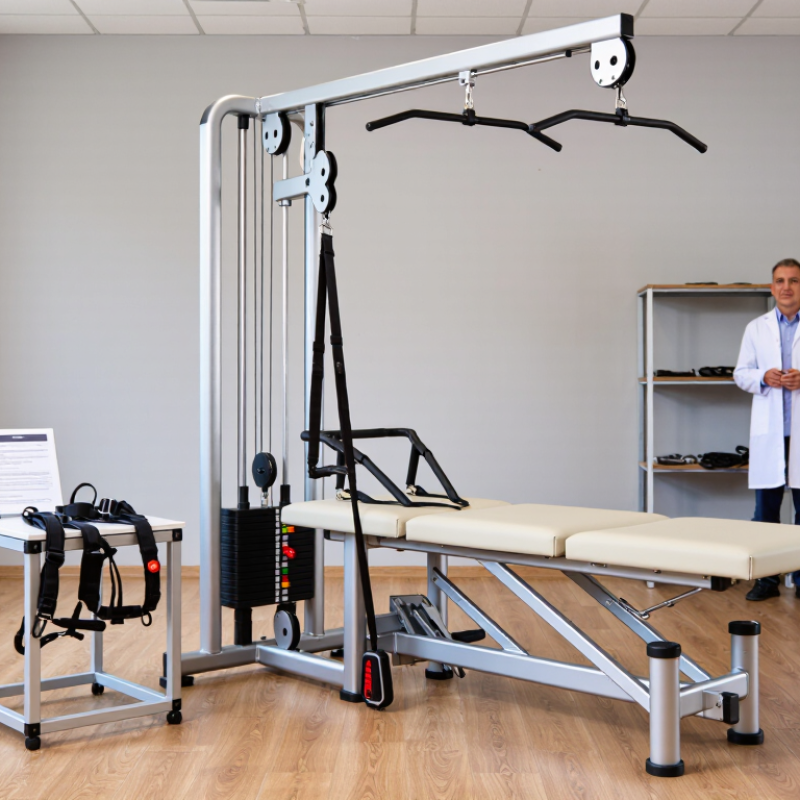
Table of Contents [Hide]
What Full Body Traction Devices Are and How They Work
Full Body Traction devices are mechanical systems designed to create a gentle lengthening force along the spine.
Most use a padded platform, pelvic harness, and upper-body support. Some operate horizontally, while others use controlled body angles. The aim is simple: reduce compressive loading temporarily and create space between spinal segments.
It is not the same as permanently “putting the spine back.”
The pulling force may be static, intermittent, or adjusted through a motor. A trained clinician usually begins with low tension, checks comfort, and watches for leg pain, numbness, or dizziness.
The Cochrane review on traction for low-back pain found limited evidence of meaningful long-term benefit. That matters. A strong pulling sensation does not prove better treatment.
The World Health Organization reported that 619 million people lived with low-back pain in 2020, showing the scale of demand, not proof that traction suits everyone.
A buying decision should consider weight limits, harness fit, emergency release, angle control, and published safety testing.
The FDA’s medical-device guidance emphasizes risk management, labeling, and performance evaluation, although consumer equipment may not offer identical clinical evidence.
People with osteoporosis, recent fractures, spinal instability, pregnancy, or unexplained neurological symptoms need professional assessment first.
Stop immediately if symptoms spread down the leg.
I would also question vague promises of “decompression.” The term sounds precise, but device settings and patient responses vary widely.

© Copyright - Pro Tool & Supply - Site by SVM E-Marketing Solutions - Sitemap
- Privacy policy