- Products
- Air Compressors & Air Tools
- Climate Control
- Compaction Equipment
- Concrete Cutting Tools & Equipment
- Concrete and Masonry
- Demolition & Excavation
- Electrical & Mechanical
- Fasteners and Anchoring Adhesives
- Floor Protection
- Generators and Welders
- Hand Tools
- Heaters
- Janitorial and Office Supplies
- Jobsite Protection
- Ladders & Storage
- Lighting & Lighting Accessories
- Man Lifts
- Material Handling Equipment
- Power Tools
- Pressure Washers & Pumps
- Safety Gear
- Safety Products
- Saws
- Surface Preparation
- SEASONAL PRODUCTS
- Rentals
- Air Compressor and Air Tool Rentals
- Climate Control Rental
- Compaction Rentals
- Concrete Equipment Rentals
- Demolition & Excavation Equipment Rentals
- Concrete Floor Grinder Rentals
- General Construction Equipment Rentals
- Generator Rentals and Welder Rentals
- Heater Rentals
- Light Tower Rentals
- Man Lift Rentals in Massachusetts and Rhode Island
- Material Handling Equipment Rentals
- Pressure Washer & Pump Rentals
- Saw Rentals in New England
- SEASONAL PRODUCTS
- Products
- Air Compressors & Air Tools
- Climate Control
- Compaction Equipment
- Concrete Cutting Tools & Equipment
- Demolition & Excavation
- Electrical & Mechanical
- Floor Protection
- Generators and Welders
- Construction Heaters
- Construction Ladders, Staging, & Storage
- Construction Lighting
- Man Lifts
- Material Handling Equipment
- Industrial Janitorial and Office Supplies
- Pressure Washers & Pumps
- Construction Safety Products
- Construction Safety Gear
- Surface Preparation
- Building Protection
- Diesel Accessories
- Zero Emissions
- Rentals
- Air Compressor and Air Tool Rentals
- Climate Control Rental
- Compaction Rentals
- Concrete Equipment Rental
- Demolition & Excavation Equipment Rental
- General Construction Equipment Rental
- Generator Rentals and Welder Rentals
- Construction Heaters Rental
- Light Tower Rentals
- Man Lift Rentals
- Material Handling Equipment Rental
- Pressure Washer & Pump Rentals
- Saw Rentals in New England
- Concrete Floor Grinder Rentals
- Zero Emissions Rentals
- Repairs & Used
- Parts
- Blog
- Services
- Resources
- About Us
- Contact Us
Sales & Rental of Construction | Industrial Equipment & Supplies

2026 Best Safety Tools for Global Buyers?
For global buyers, choosing safety tools is no longer a simple price comparison. A helmet, gas detector, or lockout device can influence daily decisions, emergency response, and worker confidence. The right choice must fit real working conditions, not merely look compliant in a product catalog.
Safety expert James Reason wrote, “We cannot change the human condition, but we can change the conditions under which humans work.” That idea remains practical today. Buyers should examine impact resistance, sensor accuracy, glove grip, battery life, maintenance needs, and storage conditions. A dusty warehouse, a humid port, and a cold construction site create different demands. Small details matter.
Reliable purchasing also requires evidence. Look for clear technical specifications, test documentation, user instructions, warranty terms, and accessible replacement parts. Check whether products match the safety requirements in the countries where they will be used. Supplier training and after-sales support deserve equal attention. A low-cost tool may become expensive when calibration is unclear or spare parts disappear.
No tool removes every risk. That is worth remembering. Workers still need training, supervision, inspection, and sensible procedures. Some buyers may also overestimate certificates, treating them as proof of universal suitability. They are not. This guide examines leading safety tools for global buyers, compares practical features, and considers where popular options may fall short. The aim is not perfect certainty. It is a more careful decision before equipment reaches the worksite.
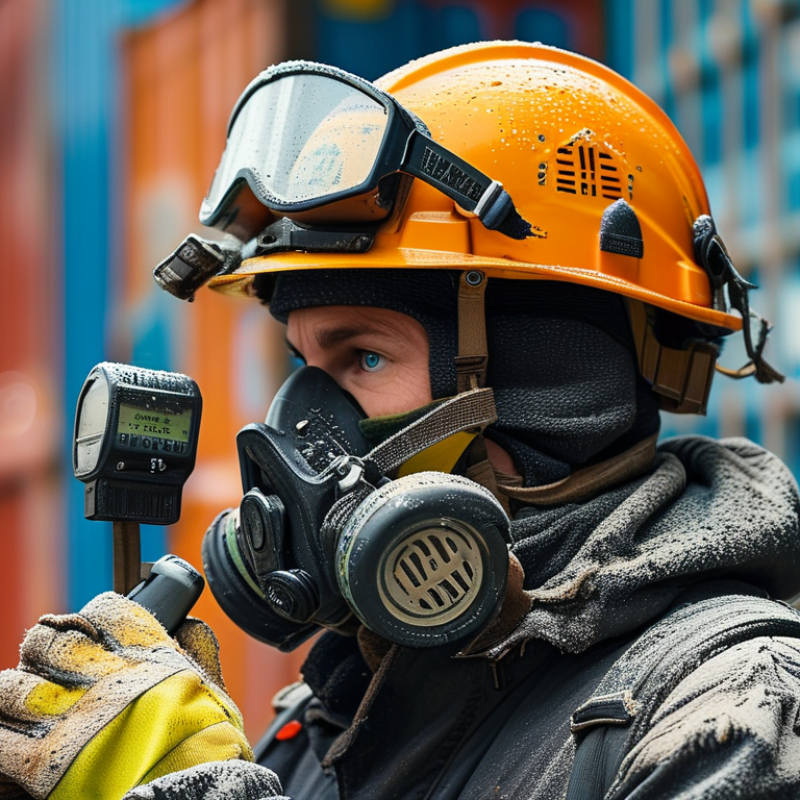
Table of Contents
[Hide]
Global Buyer Safety Tools in 2026: Scope, Definitions, and Risk Types
2026 Best Safety Tools for Global Buyers?
Global buyer safety tools should be defined by the risks they reduce, not by attractive dashboards. Their scope includes supplier identity checks, business verification, payment controls, document review, cybersecurity monitoring, and shipment tracking. The risk map is wider than fraud. It includes counterfeit goods, poor quality, delivery failure, data exposure, sanctions violations, and sudden supplier insolvency.
The Global Anti-Scam Alliance reported that consumers lost more than 1 trillion dollars to scams in 2024. That figure shows why payment verification and account-change alerts deserve serious attention. The World Economic Forum’s Global Cybersecurity Outlook 2025 found that 72% of organizations experienced increased cyber risks. Buyers should therefore use multi-factor access, verified beneficiary details, and secure document exchange. Small controls help.
Quality still needs physical evidence. A tool can confirm a company’s registration, but it cannot fully prove factory conditions or product performance. Independent inspections, sample testing, production photographs, and timestamped records create a stronger chain of evidence. The UNCTAD Digital Economy Report 2024 also highlights growing digital activity and its environmental and governance pressures. Buyers should keep audit trails for origin, data handling, and transport decisions. No tool is perfect. Overconfidence is itself a risk.
2026 Best Safety Tools for Global Buyers? — Global Buyer Safety Tools in 2026: Scope, Definitions, and Risk Types
| Safety Tool Category | Definition and Scope | Primary Risk Type Addressed | Key Evidence or Data to Check | Recommended Buyer Control | Typical Risk Level Without Verification | Important Limitation |
|---|---|---|---|---|---|---|
| Supplier Identity Verification | Processes used to confirm that a supplier is a legally registered and traceable business operating at the stated address. | Fraud, impersonation, false registration, and non-traceable counterparties. | Legal registration details, registered address, ownership information, business activity, operating history, and consistency between documents and payment details. | Match the legal entity, contract party, invoice issuer, bank-account holder, and shipment documentation before payment. | High | Registration confirms legal existence but does not prove product quality, financial strength, or reliable performance. |
| Business Credit and Financial Checks | Assessment of a counterparty’s payment behavior, financial stability, outstanding liabilities, and ability to perform contractual obligations. | Non-delivery, insolvency, delayed refunds, and payment default. | Current financial information, credit history, court or insolvency records, trade references, payment terms, and exposure limits. | Use staged payments, credit limits, written refund terms, and additional security for high-value orders. | High | Financial data may be delayed, incomplete, jurisdiction-specific, or unavailable for privately held businesses. |
| Product Compliance Verification | Review of whether goods meet the mandatory technical, safety, labeling, and documentation requirements of the destination market. | Regulatory non-compliance, product seizure, recalls, penalties, and unsafe goods. | Applicable regulations, technical files, declarations of conformity where required, test reports, safety instructions, labeling, and traceability records. | Identify the importer’s legal obligations and verify that documentation matches the exact product model, version, and destination market. | High | A certificate or test report can be outdated, unrelated to the product, or issued by an unsuitable testing body. |
| Independent Product Inspection | Physical examination and testing of production, quantity, packaging, workmanship, and selected product characteristics before shipment. | Defective goods, short shipment, specification mismatch, poor workmanship, and packaging damage. | Approved sample, inspection checklist, batch quantity, defect classification, measurement results, photographs, and sampling method. | Use inspections at pre-production, during production, and before shipment when order value or product risk justifies the cost. | Medium | Inspection is normally sample-based and cannot guarantee that every unit will be defect-free. |
| Factory and Capacity Assessment | Evaluation of whether the stated production site has suitable equipment, labor, quality controls, capacity, and subcontracting management. | Unauthorized subcontracting, inconsistent quality, production delays, and capacity shortfalls. | Production lines, quality-control procedures, equipment, staffing, production records, maintenance records, and subcontractor disclosures. | Define approval requirements for subcontractors and connect production capacity to the delivery schedule in the contract. | Medium | A site visit represents conditions at a particular time and may not reflect future production or peak-season capacity. |
| Contract and Specification Controls | Written controls that define product specifications, tolerances, packaging, delivery terms, inspection rights, remedies, and dispute procedures. | Ambiguous obligations, specification disputes, delayed delivery, and weak remedies. | Detailed specifications, approved samples, Incoterms rules, delivery dates, acceptance criteria, warranty terms, governing law, and dispute forum. | Attach measurable specifications and acceptance procedures to the signed contract rather than relying on informal messages. | Medium | A contract improves clarity but may be difficult or costly to enforce across jurisdictions. |
| Secure Payment Controls | Payment arrangements designed to reduce loss if a supplier fails to deliver, delivers non-conforming goods, or becomes unreachable. | Payment fraud, unauthorized bank-account changes, advance-payment loss, and non-delivery. | Verified beneficiary details, dual approval, payment milestones, escrow or documentary controls where appropriate, and change-of-bank verification. | Confirm payment instructions through an independent communication channel and avoid paying a different legal entity without documented justification. | High | Payment controls do not eliminate commercial or product risks and may involve additional fees or processing time. |
| Trade and Sanctions Screening | Checks of counterparties, owners, intermediaries, cargo, and destinations against applicable sanctions, export controls, and restricted-party requirements. | Blocked transactions, regulatory penalties, cargo detention, and prohibited end-use or end-user exposure. | Legal entity name, beneficial ownership, address, vessel or logistics information where relevant, destination, end use, and current official lists. | Screen before onboarding and again before shipment, especially when ownership, destination, or transaction parties change. | High | Screening tools may produce false positives and cannot replace legal advice or a documented compliance program. |
| Logistics and Shipment Tracking | Controls that monitor booking, pickup, transport milestones, customs status, delivery evidence, and cargo-document consistency. | Lost cargo, diversion, document fraud, customs delays, and missed delivery commitments. | Commercial invoice, packing list, transport document, container or parcel references, customs status, insurance details, and proof of delivery. | Reconcile shipment data across supplier, freight provider, customs documents, and receiving records. | Medium | Tracking confirms movement, not product quality, cargo condition, or the accuracy of the underlying documents. |
| Cargo and Trade Credit Insurance | Risk-transfer arrangements covering specified transport losses or certain commercial non-payment events under defined policy conditions. | Physical cargo loss, transport damage, and selected buyer-payment risks. | Policy scope, insured value, exclusions, deductibles, claim deadlines, covered routes, and required loss-prevention measures. | Review exclusions before shipment and preserve invoices, inspection records, transport documents, and evidence of loss. | Medium | Insurance does not normally cover every defect, delay, fraud event, or contractual dispute. |
| Cybersecurity and Data-Protection Controls | Measures protecting buyer, supplier, payment, customer, and shipment information exchanged through digital systems. | Account takeover, phishing, ransomware, data leakage, and fraudulent payment redirection. | Multi-factor authentication, access controls, encryption, backup practices, incident-notification procedures, and data-processing responsibilities. | Limit user permissions, verify unusual requests, use secure file exchange, and maintain an approved contact-verification process. | High | Security controls reduce exposure but cannot guarantee prevention of cyber incidents or social engineering. |
| Traceability and Recall Readiness | Ability to identify product batches, materials, production dates, shipment records, and affected customers after a safety or quality incident. | Slow recalls, unidentified affected lots, regulatory reporting failures, and customer harm. | Lot or serial numbers, production records, supplier and material records, distribution records, complaint logs, and recall procedures. | Test traceability periodically and retain records for the period required by applicable law or contract. | Medium | Traceability helps contain an incident but does not prevent unsafe products from entering the supply chain. |
| Dispute Resolution and Evidence Management | Procedures for preserving records and resolving disputes involving quality, payment, delivery, ownership, or compliance. | Unrecoverable losses, prolonged disputes, and inability to prove contractual non-performance. | Signed contracts, version-controlled specifications, inspection reports, communications, payment records, photographs, and delivery evidence. | Specify governing law, dispute forum, notice procedures, evidence retention, and escalation steps before the transaction begins. | Medium | A favorable clause may still require cross-border enforcement, translation, local counsel, and additional cost. |
Scope note: Global buyer safety in 2026 is a layered process covering identity, finance, product compliance, quality, logistics, payments, cybersecurity, and legal remedies. No single verification method eliminates all risk; controls should be matched to product hazard, transaction value, destination-market requirements, supplier history, and supply-chain complexity.
Related Posts
-

10 Safety Tools Tips Every Global Buyer Should Know?
-

Top 10 Pressure Washer Tools Every Homeowner Needs?
-

Top 10 Tips for Choosing the Best Electric Heaters for Your Home
-

Top 10 Demolition Tools You Need for Effective Projects?
-

How to Choose the Best Oil Heaters for Your Home Use?
-
10 Essential Tips for Choosing the Right Electric Power Tools for Your Projects

© Copyright - Pro Tool & Supply - Site by SVM E-Marketing Solutions - Sitemap
- Privacy policy