- Products
- Air Compressors & Air Tools
- Climate Control
- Compaction Equipment
- Concrete Cutting Tools & Equipment
- Concrete and Masonry
- Demolition & Excavation
- Electrical & Mechanical
- Fasteners and Anchoring Adhesives
- Floor Protection
- Generators and Welders
- Hand Tools
- Heaters
- Janitorial and Office Supplies
- Jobsite Protection
- Ladders & Storage
- Lighting & Lighting Accessories
- Man Lifts
- Material Handling Equipment
- Power Tools
- Pressure Washers & Pumps
- Safety Gear
- Safety Products
- Saws
- Surface Preparation
- SEASONAL PRODUCTS
- Rentals
- Air Compressor and Air Tool Rentals
- Climate Control Rental
- Compaction Rentals
- Concrete Equipment Rentals
- Demolition & Excavation Equipment Rentals
- Concrete Floor Grinder Rentals
- General Construction Equipment Rentals
- Generator Rentals and Welder Rentals
- Heater Rentals
- Light Tower Rentals
- Man Lift Rentals in Massachusetts and Rhode Island
- Material Handling Equipment Rentals
- Pressure Washer & Pump Rentals
- Saw Rentals in New England
- SEASONAL PRODUCTS
- Products
- Air Compressors & Air Tools
- Climate Control
- Compaction Equipment
- Concrete Cutting Tools & Equipment
- Demolition & Excavation
- Electrical & Mechanical
- Floor Protection
- Generators and Welders
- Construction Heaters
- Construction Ladders, Staging, & Storage
- Construction Lighting
- Man Lifts
- Material Handling Equipment
- Industrial Janitorial and Office Supplies
- Pressure Washers & Pumps
- Construction Safety Products
- Construction Safety Gear
- Surface Preparation
- Building Protection
- Diesel Accessories
- Zero Emissions
- Rentals
- Air Compressor and Air Tool Rentals
- Climate Control Rental
- Compaction Rentals
- Concrete Equipment Rental
- Demolition & Excavation Equipment Rental
- General Construction Equipment Rental
- Generator Rentals and Welder Rentals
- Construction Heaters Rental
- Light Tower Rentals
- Man Lift Rentals
- Material Handling Equipment Rental
- Pressure Washer & Pump Rentals
- Saw Rentals in New England
- Concrete Floor Grinder Rentals
- Zero Emissions Rentals
- Repairs & Used
- Parts
- Blog
- Services
- Resources
- About Us
- Contact Us
Sales & Rental of Construction | Industrial Equipment & Supplies


China Top 10 PVC Profile Mixer Manufacturers?
China’s PVC profile industry depends on stable compounding before extrusion begins. A reliable Pvc Profile Mixer must blend resin, stabilizers, lubricants, pigments, and fillers evenly. Small differences matter. They can appear later as surface streaks, weak corners, or inconsistent gloss.
This guide examines China’s top 10 Pvc Profile Mixer manufacturers through practical production criteria. These include mixing uniformity, heating control, cooling efficiency, rotor design, batch capacity, automation, maintenance access, and technical support. Factory experience also matters. A machine may look impressive in a showroom, yet perform poorly under dusty, continuous production conditions. We consider that gap carefully.
Dr. Tim A. Osswald, a respected polymer-processing educator, has expressed a useful principle: “Processing is where material knowledge becomes product performance.” That idea fits PVC profile mixing closely. The best supplier is not always the largest one. It should understand temperature-sensitive formulations, torque changes, discharge timing, and the daily pressure of production schedules.
Our comparison also considers documented installations, testing procedures, customization ability, and after-sales response. We will not treat marketing claims as proof. No ranking is perfect. Supplier data can change, and some manufacturers disclose more information than others. Buyers should still inspect facilities, request sample trials, and verify references before purchasing. A careful decision begins with evidence, not attractive photographs.
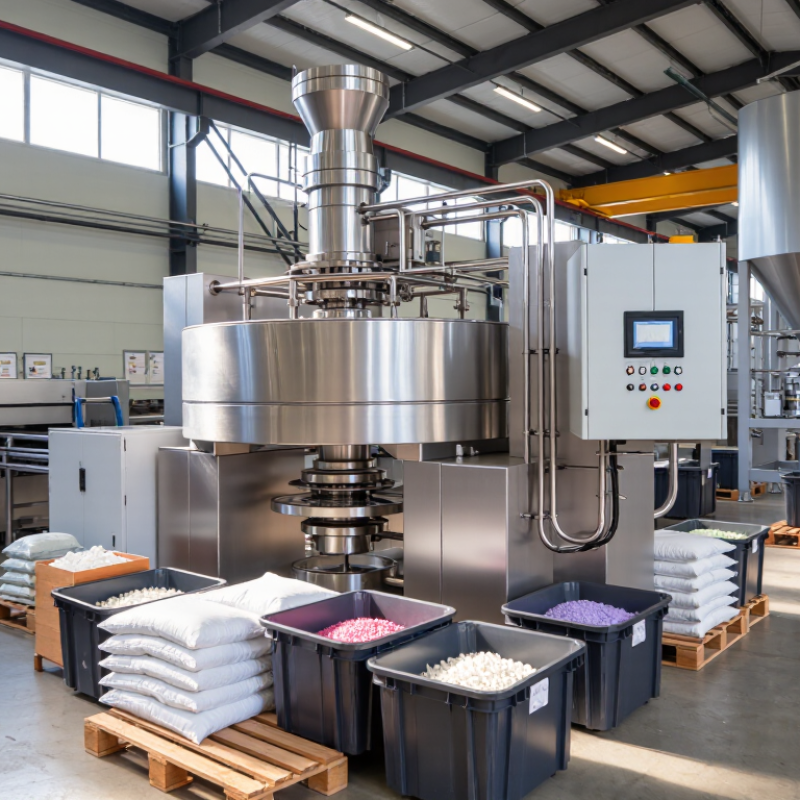
Table of Contents [Hide]
PVC Profile Mixer Fundamentals: Hot Mixing at 110–130°C and Cooling Below 45°C
China Top 10 PVC Profile Mixer Manufacturers?
A credible comparison of China’s top ten PVC profile mixer manufacturers should begin with process control, not catalog size. PVC dry blending normally heats materials to 110–130°C, allowing plasticizer absorption and additive dispersion. The mixture then needs cooling below 45°C before storage or extrusion. A 2024 Grand View Research PVC market report valued the global market at approximately USD 44 billion in 2023, showing why stable compounding equipment matters to profile producers.
In practical trials, operators should record heating time, cooling time, batch weight, and discharge temperature. A 5°C measurement error can affect flow consistency. The mixer should also limit powder buildup around the lid and discharge valve. Ceresana’s PVC market analysis identifies construction profiles as a major application, where surface defects and dimensional variation quickly become visible. Manufacturers should provide test data, power consumption, temperature records, and after-sales response times. That evidence is more useful than impressive claims.
Hot mixing is not simply “faster is better.” Excessive temperature may accelerate PVC degradation, while insufficient heating can leave additives poorly distributed. Cooling below 45°C sounds straightforward, but overloaded cooling systems often struggle during summer production. This point deserves more testing. A supplier ranking without witnessed trials remains incomplete. Shortlist candidates that can reproduce the same batch quality across repeated runs.

© Copyright - Pro Tool & Supply - Site by SVM E-Marketing Solutions - Sitemap
- Privacy policy