- Products
- Air Compressors & Air Tools
- Climate Control
- Compaction Equipment
- Concrete Cutting Tools & Equipment
- Concrete and Masonry
- Demolition & Excavation
- Electrical & Mechanical
- Fasteners and Anchoring Adhesives
- Floor Protection
- Generators and Welders
- Hand Tools
- Heaters
- Janitorial and Office Supplies
- Jobsite Protection
- Ladders & Storage
- Lighting & Lighting Accessories
- Man Lifts
- Material Handling Equipment
- Power Tools
- Pressure Washers & Pumps
- Safety Gear
- Safety Products
- Saws
- Surface Preparation
- SEASONAL PRODUCTS
- Rentals
- Air Compressor and Air Tool Rentals
- Climate Control Rental
- Compaction Rentals
- Concrete Equipment Rentals
- Demolition & Excavation Equipment Rentals
- Concrete Floor Grinder Rentals
- General Construction Equipment Rentals
- Generator Rentals and Welder Rentals
- Heater Rentals
- Light Tower Rentals
- Man Lift Rentals in Massachusetts and Rhode Island
- Material Handling Equipment Rentals
- Pressure Washer & Pump Rentals
- Saw Rentals in New England
- SEASONAL PRODUCTS
- Products
- Air Compressors & Air Tools
- Climate Control
- Compaction Equipment
- Concrete Cutting Tools & Equipment
- Demolition & Excavation
- Electrical & Mechanical
- Floor Protection
- Generators and Welders
- Construction Heaters
- Construction Ladders, Staging, & Storage
- Construction Lighting
- Man Lifts
- Material Handling Equipment
- Industrial Janitorial and Office Supplies
- Pressure Washers & Pumps
- Construction Safety Products
- Construction Safety Gear
- Surface Preparation
- Building Protection
- Diesel Accessories
- Zero Emissions
- Rentals
- Air Compressor and Air Tool Rentals
- Climate Control Rental
- Compaction Rentals
- Concrete Equipment Rental
- Demolition & Excavation Equipment Rental
- General Construction Equipment Rental
- Generator Rentals and Welder Rentals
- Construction Heaters Rental
- Light Tower Rentals
- Man Lift Rentals
- Material Handling Equipment Rental
- Pressure Washer & Pump Rentals
- Saw Rentals in New England
- Concrete Floor Grinder Rentals
- Zero Emissions Rentals
- Repairs & Used
- Parts
- Blog
- Services
- Resources
- About Us
- Contact Us
Sales & Rental of Construction | Industrial Equipment & Supplies


China Best YT27 Air Leg Rock Drill Supplier or Manufacturer?
Choosing the China best YT27 Air Leg Rock Drill supplier or manufacturer requires more than comparing prices. This pneumatic rock drill works in demanding underground conditions, where dust, vibration, moisture, and limited ventilation expose weak design quickly. A reliable supplier should explain air consumption, drilling depth, impact frequency, leg stability, and spare-parts availability. Product photographs are useful. Field evidence is better.
Mining equipment engineer Li Wei once said, “A reliable drill is measured underground, not on a showroom floor.” That observation reflects practical experience. During inspection, buyers should check the feed leg joints, throttle response, hose connections, and lubrication system. A steady drill should start cleanly and maintain force against hard rock. Excessive vibration can signal poor machining, worn components, or unsuitable operating pressure. Small details matter.
The strongest Chinese manufacturers usually provide technical drawings, factory inspection records, operating manuals, and responsive after-sales support. They may also offer customized fittings for different air systems and drilling environments. However, no supplier is perfect. Some websites present impressive claims without showing test conditions or customer references. That deserves careful questioning.
This guide examines how to distinguish a genuine manufacturer from a trading company. It also considers production capability, quality control, certifications, delivery reliability, and long-term maintenance. The right choice is not always the cheapest quotation. It is the supplier that can support consistent drilling performance after the first shipment arrives. Words are easy. Evidence is harder.
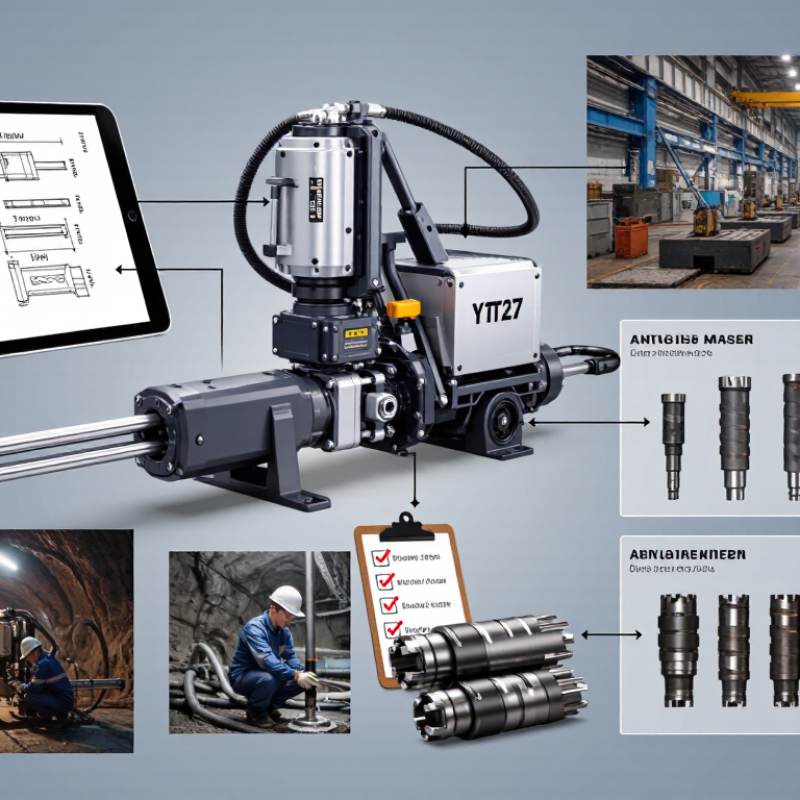
Table of Contents [Hide]
YT27 Air Leg Rock Drill: Definition, Design, and Core Functions
China Best YT27 Air Leg Rock Drill Supplier or Manufacturer?
The YT27 air leg rock drill is a pneumatic machine for drilling holes in rock. It combines a reciprocating piston, rotary mechanism, water-flushing passage, and adjustable air leg. Compressed air drives the piston and rotates the drill steel. The air leg then supports the tool against the rock face. This design reduces manual lifting during horizontal or inclined drilling. Its core functions include drilling holes for anchoring, tunneling, quarrying, and controlled excavation. It is compact, but not lightweight in every working condition.
The U.S. Geological Survey estimated U.S. crushed stone production at about 1.5 billion metric tons in 2023, showing the scale of rock-related work (USGS, Mineral Commodity Summaries 2024). Such demand makes drilling efficiency important, but speed alone is a poor selection measure. Operators should examine impact frequency, air consumption, drilling diameter, flushing performance, and vibration data. ISO 28927-10 provides a method for measuring hand-held rock-drill vibration. NIOSH research also links pneumatic drilling with hand-arm vibration and noise exposure. A credible supplier or manufacturer should provide test records, maintenance intervals, spare-part compatibility, and operating instructions. Field experience matters here. A higher output model may waste air on a weak compressor. That assumption is easy to miss. In practice, the best YT27 configuration depends on rock hardness, hole depth, compressor capacity, and the crew’s maintenance discipline. Some specifications look impressive on paper, yet perform poorly underground.

© Copyright - Pro Tool & Supply - Site by SVM E-Marketing Solutions - Sitemap
- Privacy policy