- Products
- Air Compressors & Air Tools
- Climate Control
- Compaction Equipment
- Concrete Cutting Tools & Equipment
- Concrete and Masonry
- Demolition & Excavation
- Electrical & Mechanical
- Fasteners and Anchoring Adhesives
- Floor Protection
- Generators and Welders
- Hand Tools
- Heaters
- Janitorial and Office Supplies
- Jobsite Protection
- Ladders & Storage
- Lighting & Lighting Accessories
- Man Lifts
- Material Handling Equipment
- Power Tools
- Pressure Washers & Pumps
- Safety Gear
- Safety Products
- Saws
- Surface Preparation
- SEASONAL PRODUCTS
- Rentals
- Air Compressor and Air Tool Rentals
- Climate Control Rental
- Compaction Rentals
- Concrete Equipment Rentals
- Demolition & Excavation Equipment Rentals
- Concrete Floor Grinder Rentals
- General Construction Equipment Rentals
- Generator Rentals and Welder Rentals
- Heater Rentals
- Light Tower Rentals
- Man Lift Rentals in Massachusetts and Rhode Island
- Material Handling Equipment Rentals
- Pressure Washer & Pump Rentals
- Saw Rentals in New England
- SEASONAL PRODUCTS
- Products
- Air Compressors & Air Tools
- Climate Control
- Compaction Equipment
- Concrete Cutting Tools & Equipment
- Demolition & Excavation
- Electrical & Mechanical
- Floor Protection
- Generators and Welders
- Construction Heaters
- Construction Ladders, Staging, & Storage
- Construction Lighting
- Man Lifts
- Material Handling Equipment
- Industrial Janitorial and Office Supplies
- Pressure Washers & Pumps
- Construction Safety Products
- Construction Safety Gear
- Surface Preparation
- Building Protection
- Diesel Accessories
- Zero Emissions
- Rentals
- Air Compressor and Air Tool Rentals
- Climate Control Rental
- Compaction Rentals
- Concrete Equipment Rental
- Demolition & Excavation Equipment Rental
- General Construction Equipment Rental
- Generator Rentals and Welder Rentals
- Construction Heaters Rental
- Light Tower Rentals
- Man Lift Rentals
- Material Handling Equipment Rental
- Pressure Washer & Pump Rentals
- Saw Rentals in New England
- Concrete Floor Grinder Rentals
- Zero Emissions Rentals
- Repairs & Used
- Parts
- Blog
- Services
- Resources
- About Us
- Contact Us
Sales & Rental of Construction | Industrial Equipment & Supplies


How to Choose Eforthink Downlink UWB Navigation System in 2026?
Choosing an Eforthink Downlink UWB Navigation System in 2026 requires more than comparing range figures. The right decision begins with the site itself: warehouse aisles, metal shelving, concrete walls, moving vehicles, and changing worker positions. Each detail can affect signal stability and positioning accuracy.
Dr. Moe Z. Win, a recognized UWB researcher, emphasizes a practical principle: “Localization must be judged by performance in the real environment, not by laboratory claims alone.” This view should guide every evaluation. Ask where anchors will be installed, how tags will be carried, and whether the system remains reliable near machinery. Check update rates, communication coverage, battery demands, software integration, and maintenance procedures. Numbers matter.
Real deployment exposes weaknesses.
A serious comparison should include a site survey, pilot testing, and repeat measurements during normal operations. Examine whether the Eforthink Downlink UWB Navigation System delivers consistent results when people move between anchors. Review its downlink architecture, synchronization method, positioning algorithm, and data interface. Also confirm technical support, firmware updates, documentation, and scalability for future zones.
Perfection is unlikely. Some published specifications may not match difficult facilities. That is why hands-on testing remains essential. A system that performs well in one open room may struggle beside steel racks or dense equipment. The strongest choice balances accuracy, reliability, installation effort, total ownership cost, and long-term service. In 2026, buyers should select evidence over impressive wording, and practical performance over assumptions.
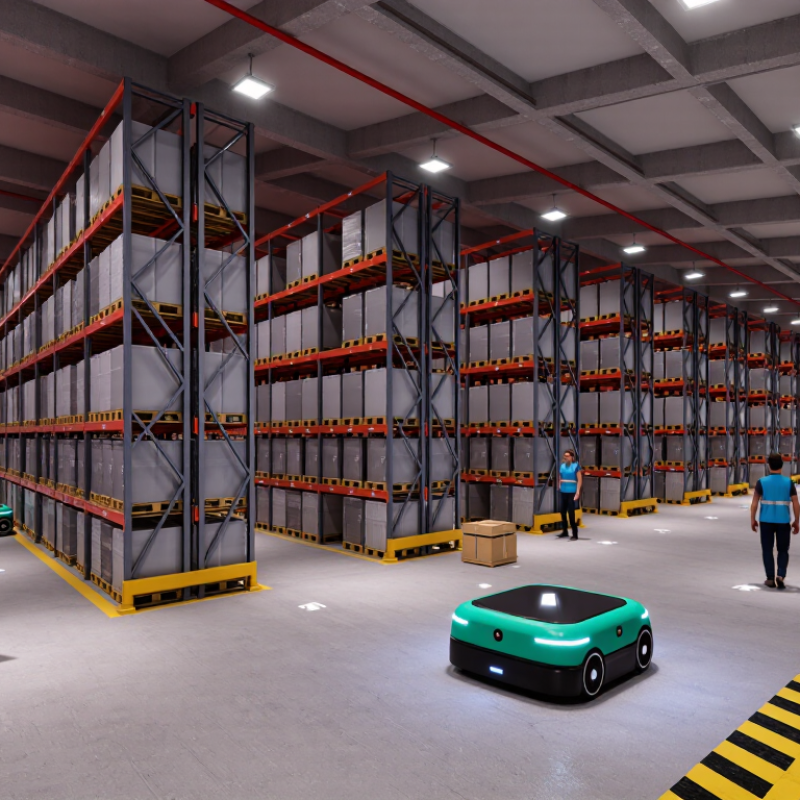
Table of Contents [Hide]
Understanding Eforthink Downlink UWB Navigation System Basics
Choosing a downlink UWB navigation system in 2026 starts with understanding how it works. Fixed anchors transmit short radio pulses to mobile tags. The tag receives these signals and estimates its position from signal timing. Accurate timing is essential. A difference of one nanosecond can represent roughly 30 centimeters of distance.
The installation environment matters as much as the hardware. Measure the site before selecting equipment. Record ceiling height, metal surfaces, moving machinery, and areas with blocked visibility. Place anchors around the working zone, not only along one wall. More anchors can improve stability, but poor placement creates misleading confidence. Ask whether the system supports two-way ranging, time-difference methods, or onboard position calculation. These choices affect latency, battery life, and network traffic.
Look beyond advertised accuracy. Test performance near shelves, corners, and people. Non-line-of-sight conditions may produce sudden position jumps. A reliable system should provide diagnostics, calibration tools, firmware controls, and clear data records. It should also integrate with existing software through documented interfaces. During trials, compare results with surveyed reference points and repeat tests at different times. I would not trust a clean demonstration alone. Real sites are untidy. Even a careful installation can need recalibration after layout changes. Check update policies, technical support quality, and data protection practices before deployment. The best choice is the system that remains understandable when conditions become imperfect.
How to Choose Eforthink Downlink UWB Navigation System in 2026? - Understanding Eforthink Downlink UWB Navigation System Basics
A practical, brand-neutral selection guide for evaluating downlink ultra-wideband navigation systems and deployment requirements.
| Evaluation Category | Key Dimension | Reference Requirement or Typical Value | Why It Matters | Recommended Validation Method |
|---|---|---|---|---|
| System Architecture | Downlink positioning method | Fixed anchors transmit synchronized signals; mobile tags estimate position from signal timing or phase information. | Downlink operation can reduce tag-side communication and may support low-power mobile devices. | Confirm whether the system uses time-of-flight, time-difference-of-arrival, angle information, or a hybrid method. |
| Radio Technology | UWB frequency range | IEEE 802.15.4 UWB channels operate within the approximately 3.1–10.6 GHz ultra-wideband spectrum range. | Frequency selection affects regional compliance, antenna design, propagation behavior, and coexistence. | Check supported channels, regional radio approvals, antenna specifications, and configuration restrictions. |
| Radio Technology | Channel bandwidth | Common high-rate UWB channels use bandwidths close to 500 MHz, depending on the selected channel and standard profile. | Wide bandwidth enables fine time resolution, which is important for accurate ranging. | Review the technical specification and verify channel bandwidth in a spectrum or conducted test where appropriate. |
| Positioning Performance | Range accuracy | Sub-meter accuracy is technically achievable in suitable line-of-sight environments; actual results depend on geometry, calibration, multipath, and installation. | Published accuracy without test conditions may not represent performance in warehouses, factories, or public spaces. | Request results from a repeatable test route covering open areas, obstructions, reflective surfaces, and different tag orientations. |
| Positioning Performance | Update rate and latency | Select according to use case: approximately 1–10 Hz for monitoring, and higher rates for motion control or fast asset tracking. | Higher update rates can improve responsiveness but usually increase radio traffic, processing load, and power consumption. | Measure end-to-end latency from tag movement to application output under the intended number of active tags. |
| Coverage Planning | Anchor spacing and geometry | Use multiple anchors with good spatial separation; four or more anchors are commonly preferred for robust two-dimensional positioning. | Anchor geometry directly affects dilution of precision, height estimation, and resilience to signal blockage. | Simulate the planned floor area and conduct a site survey before finalizing anchor locations. |
| Coverage Planning | Line-of-sight and non-line-of-sight behavior | Direct line-of-sight generally provides the most stable results; walls, metal structures, people, and machinery can introduce bias. | Non-line-of-sight errors may cause position jumps or a persistent offset even when radio connectivity remains available. | Test representative obstructions and assess filtering, quality indicators, and fallback behavior. |
| Synchronization | Anchor clock synchronization | Timing-based positioning requires tightly controlled synchronization or a ranging procedure that compensates for clock differences. | Clock drift and synchronization errors translate directly into distance or position errors. | Check synchronization architecture, holdover behavior, network dependency, and performance after link interruptions. |
| Scalability | Number of supported tags | Capacity depends on packet duration, update rate, channel access method, anchor count, and application traffic. | A system that performs well with a few tags may experience collisions or delayed updates at larger scale. | Run a load test using the expected peak tag population plus a reasonable growth margin. |
| Mobile Device | Tag power consumption | Battery life is determined by transmit or receive duty cycle, update rate, processor load, battery capacity, and power-saving modes. | Low-power tags are important for personnel badges, tools, returnable containers, and long-term asset tracking. | Measure current in sleep, acquisition, tracking, and loss-of-signal recovery states at the required update rate. |
| Environmental Design | Operating temperature and enclosure | Choose an industrial temperature range and enclosure rating appropriate to the site; common ingress targets include IP54, IP65, or higher. | Dust, water, vibration, condensation, and temperature changes can affect both electronics and measurement stability. | Match the declared environmental ratings with the installation conditions and review test standards used for certification. |
| Integration | Data interfaces | Typical integration options include Ethernet, Wi-Fi, cellular backhaul, serial interfaces, MQTT, REST APIs, or message-based protocols. | Open interfaces simplify connection to warehouse management, manufacturing execution, safety, and analytics systems. | Request interface documentation, sample payloads, authentication methods, rate limits, and event-time definitions. |
| Data Quality | Position confidence and diagnostics | Useful outputs include coordinates, timestamp, anchor quality, ranging quality, confidence score, and loss-of-update status. | Diagnostics allow applications to distinguish real movement from multipath, interference, or temporary coverage loss. | Verify that quality metrics are available in real time and can be stored for troubleshooting and audit purposes. |
| Security | Ranging and communication protection | Prefer authenticated devices, protected session procedures, secure key management, and cryptographic ranging features where supported. | Secure ranging helps reduce spoofing, unauthorized tracking, and manipulation of location data. | Review the security architecture, key rotation process, firmware signing, access control, and vulnerability response policy. |
| Compliance | Regulatory approval | Radio operation must comply with the requirements of the deployment region, including permitted bands, power limits, and testing rules. | Approval requirements vary by jurisdiction and may affect channel selection, installation, and importation. | Confirm applicable regional certifications and retain declarations, test reports, and installation restrictions. |
| Deployment | Installation and calibration effort | A complete deployment normally includes anchor placement, coordinate surveying, height measurement, calibration, and coverage verification. | Correct physical installation is often as important as the radio hardware for achieving consistent positioning. | Estimate labor, tools, commissioning time, recalibration procedures, and maintenance access before purchase. |
| Lifecycle | Firmware and maintenance | Look for controlled firmware updates, rollback capability, configuration backup, event logs, and documented maintenance procedures. | Long-term reliability depends on the ability to address security issues, improve algorithms, and recover from failed updates. | Evaluate update mechanisms in a staging environment and confirm support duration and change-management procedures. |
| Commercial Decision | Total cost of ownership | Include anchors, tags, gateways, installation, calibration, software, connectivity, batteries, support, and replacement units. | The purchase price alone may not reflect the recurring cost of operating a location system. | Build a three- to five-year cost model using the expected site size, tag population, battery replacement rate, and support needs. |

© Copyright - Pro Tool & Supply - Site by SVM E-Marketing Solutions - Sitemap
- Privacy policy