| Steel Grade | ASTM A53 Grade B | Minimum yield strength: approximately 240 MPa; minimum tensile strength: approximately 415 MPa | Water, air, steam, structural and general mechanical services | A common carbon-steel option for general service. Confirm whether the project requires Type E, Type F or Type S manufacturing. |
| Steel Grade | API 5L Grade B | Minimum yield strength: approximately 245 MPa; minimum tensile strength: approximately 415 MPa | Oil and gas transmission, gathering and process piping | Use only when the applicable pipeline specification and required product level, testing and documentation are clearly defined. |
| Steel Grade | API 5L X42 / X52 | Minimum yield strength: approximately 290 MPa / 359 MPa respectively | Higher-strength pipeline and utility transmission systems | Higher strength can reduce required wall thickness, but weldability, toughness, forming and design-code limits must be checked. |
| Steel Grade | ASTM A500 Grade B or C | Cold-formed welded structural tubing; Grade B and C have different strength requirements | Columns, trusses, frames and other structural members | Select this standard for structural hollow sections rather than pressure-service piping unless the design specification permits it. |
| Pipe Size | Small and medium outside diameters | Commonly produced by ERW or HFW; exact availability depends on the selected standard and mill capability | Building services, water lines, mechanical systems and general process piping | Specify outside diameter or nominal pipe size, schedule or wall thickness, length, end finish and dimensional tolerance. |
| Pipe Size | Large outside diameters | Commonly produced by LSAW or SSAW; typical projects may use diameters above approximately 16 in (406.4 mm) | Large water mains, piling, transmission lines and long-distance pipeline systems | Check roundness, straightness, weld inspection, end preparation and transport limitations for large-diameter pipe. |
| Wall Thickness | Light wall | Selected for low-pressure service when permitted by the applicable design code | Ventilation, low-pressure water, air and non-critical utility lines | Do not select by weight alone. Verify pressure rating, corrosion allowance, buckling resistance, handling loads and minimum permitted thickness. |
| Wall Thickness | Standard wall | A widely used starting point for general piping; the actual wall is governed by the selected schedule or standard | Industrial utilities, water distribution and general process service | Calculate the required wall from design pressure, design temperature, allowable stress, weld factor and corrosion allowance. |
| Wall Thickness | Heavy wall | Used when higher pressure, external loading, corrosion allowance or mechanical strength is required | High-pressure lines, buried pipe, risers and severe mechanical service | Consider increased weight, forming requirements, welding heat input, dimensional tolerances and total installed cost. |
| Seam Type | ERW / HFW | Longitudinal seam formed from strip or plate using electric resistance or high-frequency welding | Small-to-medium diameter water, mechanical, structural and process piping | Efficient for high-volume production. Confirm seam heat treatment, nondestructive testing and applicable dimensional requirements. |
| Seam Type | LSAW | Longitudinal submerged arc welded pipe, commonly formed from plate | Large-diameter and heavy-wall transmission, water and structural applications | Often selected for demanding dimensional and pressure-service requirements; specify weld inspection and hydrostatic testing. |
| Seam Type | SSAW / Spiral Submerged Arc Welded | Spiral seam formed from steel strip and welded by submerged arc welding | Large-diameter water, piling, low-to-moderate pressure and structural applications | Review the applicable code carefully because the helical seam, inspection level and permitted service vary by specification. |
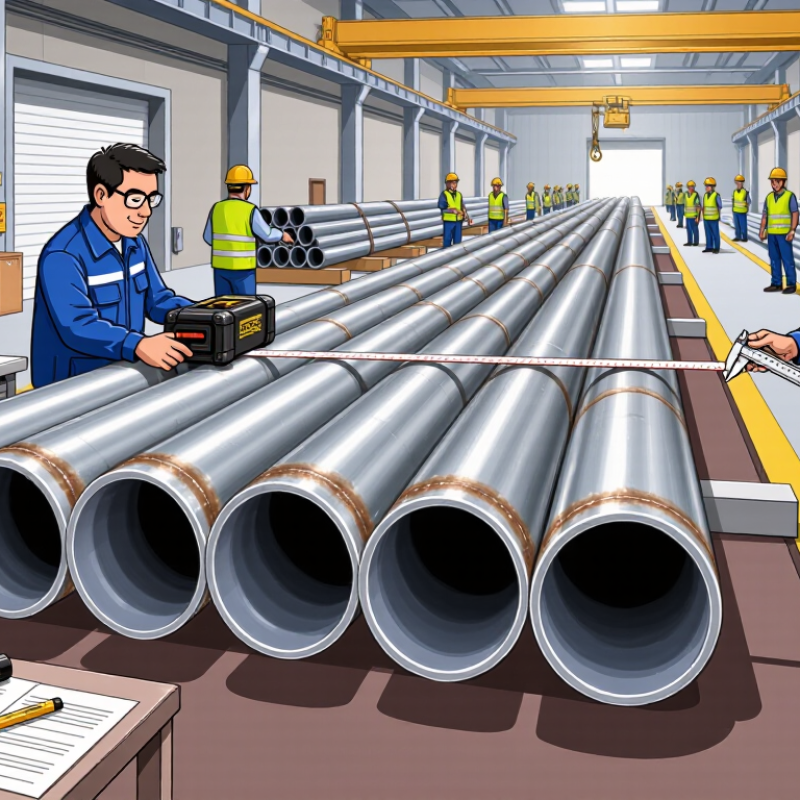
| Quality and Compliance | Specification-based inspection | Material certificate, chemical and mechanical tests, dimensional inspection, hydrostatic test and NDT as required | Pressure, pipeline, structural and safety-critical projects | The pipe standard, design code, testing level, acceptance criteria, coating system and traceability requirements should be agreed before purchase. |