- Products
- Air Compressors & Air Tools
- Climate Control
- Compaction Equipment
- Concrete Cutting Tools & Equipment
- Concrete and Masonry
- Demolition & Excavation
- Electrical & Mechanical
- Fasteners and Anchoring Adhesives
- Floor Protection
- Generators and Welders
- Hand Tools
- Heaters
- Janitorial and Office Supplies
- Jobsite Protection
- Ladders & Storage
- Lighting & Lighting Accessories
- Man Lifts
- Material Handling Equipment
- Power Tools
- Pressure Washers & Pumps
- Safety Gear
- Safety Products
- Saws
- Surface Preparation
- SEASONAL PRODUCTS
- Rentals
- Air Compressor and Air Tool Rentals
- Climate Control Rental
- Compaction Rentals
- Concrete Equipment Rentals
- Demolition & Excavation Equipment Rentals
- Concrete Floor Grinder Rentals
- General Construction Equipment Rentals
- Generator Rentals and Welder Rentals
- Heater Rentals
- Light Tower Rentals
- Man Lift Rentals in Massachusetts and Rhode Island
- Material Handling Equipment Rentals
- Pressure Washer & Pump Rentals
- Saw Rentals in New England
- SEASONAL PRODUCTS
- Products
- Air Compressors & Air Tools
- Climate Control
- Compaction Equipment
- Concrete Cutting Tools & Equipment
- Demolition & Excavation
- Electrical & Mechanical
- Floor Protection
- Generators and Welders
- Construction Heaters
- Construction Ladders, Staging, & Storage
- Construction Lighting
- Man Lifts
- Material Handling Equipment
- Industrial Janitorial and Office Supplies
- Pressure Washers & Pumps
- Construction Safety Products
- Construction Safety Gear
- Surface Preparation
- Building Protection
- Diesel Accessories
- Zero Emissions
- Rentals
- Air Compressor and Air Tool Rentals
- Climate Control Rental
- Compaction Rentals
- Concrete Equipment Rental
- Demolition & Excavation Equipment Rental
- General Construction Equipment Rental
- Generator Rentals and Welder Rentals
- Construction Heaters Rental
- Light Tower Rentals
- Man Lift Rentals
- Material Handling Equipment Rental
- Pressure Washer & Pump Rentals
- Saw Rentals in New England
- Concrete Floor Grinder Rentals
- Zero Emissions Rentals
- Repairs & Used
- Parts
- Blog
- Services
- Resources
- About Us
- Contact Us
Sales & Rental of Construction | Industrial Equipment & Supplies


What Is Molybdenum Round Rod Used For?
molybdenum round rod is valued where ordinary metals soften, distort, or react under severe heat. Its melting point is about 2,623°C, and it maintains useful strength in many high-temperature environments. Manufacturers use it for furnace components, heating supports, electrodes, pins, shafts, and precision fixtures. It also appears in semiconductor processing, glass manufacturing, vacuum equipment, and specialized aerospace systems.
In a vacuum furnace, a molybdenum round rod may support heavy parts during sintering. Its low thermal expansion helps maintain alignment as temperatures rise and fall. In glass production, molybdenum electrodes can conduct current while resisting molten glass better than many conventional metals. Its clean surface and predictable dimensions also matter in controlled manufacturing areas. Small differences in diameter can affect fit, electrical performance, and heat distribution.
However, molybdenum is not a universal solution. It can oxidize rapidly at elevated temperatures in air, so designers often specify vacuum, hydrogen, or another controlled atmosphere. Machining also requires care because incorrect cutting conditions may damage the surface or create stress. Grade selection, purity, diameter, straightness, and finish should match the operating conditions. This part is sometimes underestimated.
Reliable suppliers provide mill certificates, dimensional inspection, and traceability for demanding applications. Engineers should also review load, temperature, atmosphere, and joining methods before selecting a rod. The best use of molybdenum round rod depends on the complete system, not simply its impressive heat resistance. Performance claims should be verified through testing, especially when service conditions vary.
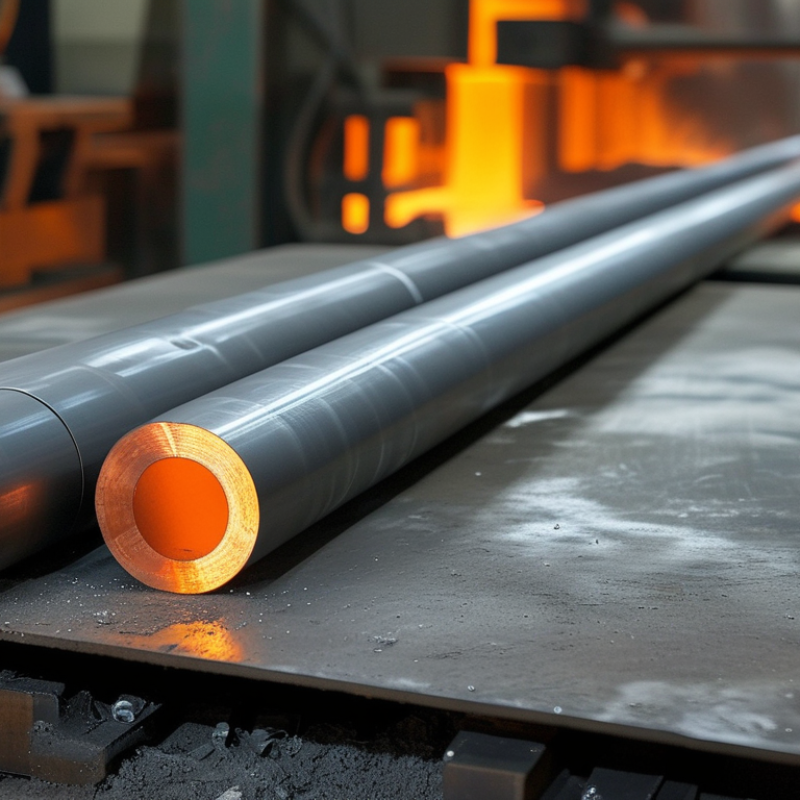
Table of Contents [Hide]
Definition and Key Properties of Molybdenum Round Rods
What Is Molybdenum Round Rod Used For?
Molybdenum round rods are solid, cylindrical parts made from a refractory metal. NIST Chemistry WebBook lists molybdenum’s melting point at about 2,623°C. Its density is approximately 10.28 g/cm³, while thermal conductivity reaches about 138 W/m·K near room temperature. These properties help the rod retain strength and dimensional stability during severe thermal cycling. The material also has a low thermal expansion coefficient, close to 4.8 × 10⁻⁶/K. That matters when a furnace fixture must remain aligned after repeated heating and cooling.
In practice, manufacturers use molybdenum rods for furnace supports, heating assemblies, electrodes, mandrels, and high-temperature tooling. They are also machined into pins, shafts, and fasteners for vacuum or inert-atmosphere equipment. The U.S. Geological Survey’s Mineral Commodity Summaries 2025 estimated global molybdenum mine production at about 260,000 metric tons in 2024. This figure reflects continuing industrial demand, especially from alloy, energy, and high-temperature applications. Yet the rod is not perfect. It can be brittle at room temperature, difficult to machine, and vulnerable to oxidation in hot air. Engineers therefore select grain structure, purity, diameter, and surface condition carefully. A polished rod may perform well in a controlled furnace but fail early in an exposed oxidizing zone. Small design details matter.

© Copyright - Pro Tool & Supply - Site by SVM E-Marketing Solutions - Sitemap
- Privacy policy