- Products
- Air Compressors & Air Tools
- Climate Control
- Compaction Equipment
- Concrete Cutting Tools & Equipment
- Concrete and Masonry
- Demolition & Excavation
- Electrical & Mechanical
- Fasteners and Anchoring Adhesives
- Floor Protection
- Generators and Welders
- Hand Tools
- Heaters
- Janitorial and Office Supplies
- Jobsite Protection
- Ladders & Storage
- Lighting & Lighting Accessories
- Man Lifts
- Material Handling Equipment
- Power Tools
- Pressure Washers & Pumps
- Safety Gear
- Safety Products
- Saws
- Surface Preparation
- SEASONAL PRODUCTS
- Rentals
- Air Compressor and Air Tool Rentals
- Climate Control Rental
- Compaction Rentals
- Concrete Equipment Rentals
- Demolition & Excavation Equipment Rentals
- Concrete Floor Grinder Rentals
- General Construction Equipment Rentals
- Generator Rentals and Welder Rentals
- Heater Rentals
- Light Tower Rentals
- Man Lift Rentals in Massachusetts and Rhode Island
- Material Handling Equipment Rentals
- Pressure Washer & Pump Rentals
- Saw Rentals in New England
- SEASONAL PRODUCTS
- Products
- Air Compressors & Air Tools
- Climate Control
- Compaction Equipment
- Concrete Cutting Tools & Equipment
- Demolition & Excavation
- Electrical & Mechanical
- Floor Protection
- Generators and Welders
- Construction Heaters
- Construction Ladders, Staging, & Storage
- Construction Lighting
- Man Lifts
- Material Handling Equipment
- Industrial Janitorial and Office Supplies
- Pressure Washers & Pumps
- Construction Safety Products
- Construction Safety Gear
- Surface Preparation
- Building Protection
- Diesel Accessories
- Zero Emissions
- Rentals
- Air Compressor and Air Tool Rentals
- Climate Control Rental
- Compaction Rentals
- Concrete Equipment Rental
- Demolition & Excavation Equipment Rental
- General Construction Equipment Rental
- Generator Rentals and Welder Rentals
- Construction Heaters Rental
- Light Tower Rentals
- Man Lift Rentals
- Material Handling Equipment Rental
- Pressure Washer & Pump Rentals
- Saw Rentals in New England
- Concrete Floor Grinder Rentals
- Zero Emissions Rentals
- Repairs & Used
- Parts
- Blog
- Services
- Resources
- About Us
- Contact Us
Sales & Rental of Construction | Industrial Equipment & Supplies


7 Tips for Choosing the Best Rackmount PCs?
Choosing the best Rackmount Pcs is not only a matter of counting processor cores or comparing prices. These systems must survive tight spaces, constant vibration, restricted airflow, and demanding workloads. A poorly chosen chassis can become a loud, hot, expensive mistake.
Neil Rasmussen, a respected data-center infrastructure expert and founder of APC, has emphasized, “The most important thing in a data center is availability.” That principle applies directly to Rackmount PCs. A reliable system should fit the rack correctly, maintain stable temperatures, and support practical maintenance. It should also match the application, whether it controls factory equipment, stores surveillance data, manages networks, or runs edge computing software.
This guide presents seven practical tips for choosing the right Rackmount PCs. It examines rack height, CPU performance, memory capacity, storage options, cooling design, expansion flexibility, and long-term support. Each detail matters. Small gaps can create large problems.
Real-world experience also changes the decision. A compact 1U computer may save space, but its fans can become distracting in a quiet control room. A deeper chassis may offer better expansion, yet fail inside a shallow cabinet. These trade-offs are easy to overlook. I have found that specifications rarely tell the whole story.
No checklist is perfect. Vendor documentation may be incomplete, and future workloads are difficult to predict. Still, careful comparison reduces risk. The best Rackmount PCs are not always the fastest models. They are the systems that remain dependable, serviceable, and appropriately sized for their environment.
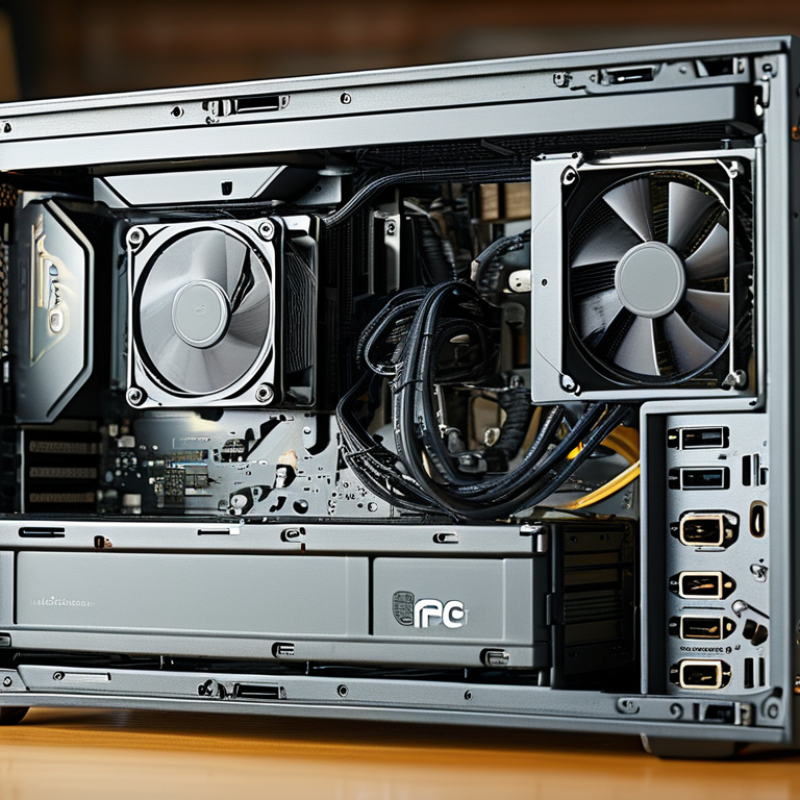
Table of Contents [Hide]
Define Rackmount PC Requirements and Intended Applications
7 Tips for Choosing the Best Rackmount PCs?
Define Rackmount PC Requirements and Intended Applications
Start with the workload, not the chassis. A firewall, industrial controller, and virtualisation host need different hardware. List required CPU threads, memory capacity, storage type, network ports, and operating temperature. Measure the rack depth and available power outlets. A short-depth 2U system may fit better than a powerful 4U unit in a compact cabinet. Physical clearance matters.
Think about growth. The International Energy Agency projects global data-centre electricity demand could exceed 1,000 TWh by 2026. The Lawrence Berkeley National Laboratory estimates U.S. data centres used 176 TWh in 2023, potentially reaching 325–580 TWh by 2028. These figures make power efficiency a design requirement, not a marketing detail. Calculate peak wattage, cooling demand, and backup runtime before selecting processors or expansion cards. Small errors become expensive.
I once saw a team choose maximum memory without checking airflow. The system throttled under sustained workloads. That decision looked efficient on paper, but failed in the cabinet. Consider redundant power supplies, front-to-back airflow, remote monitoring, and tool-less service access. For continuous operation, confirm error-correcting memory, storage endurance, and replacement procedures. Also question every assumption. A rackmount PC built for laboratory testing may not survive vibration, dust, or a 45°C equipment room. Operational evidence should guide the final configuration.

© Copyright - Pro Tool & Supply - Site by SVM E-Marketing Solutions - Sitemap
- Privacy policy