- Products
- Air Compressors & Air Tools
- Climate Control
- Compaction Equipment
- Concrete Cutting Tools & Equipment
- Concrete and Masonry
- Demolition & Excavation
- Electrical & Mechanical
- Fasteners and Anchoring Adhesives
- Floor Protection
- Generators and Welders
- Hand Tools
- Heaters
- Janitorial and Office Supplies
- Jobsite Protection
- Ladders & Storage
- Lighting & Lighting Accessories
- Man Lifts
- Material Handling Equipment
- Power Tools
- Pressure Washers & Pumps
- Safety Gear
- Safety Products
- Saws
- Surface Preparation
- SEASONAL PRODUCTS
- Rentals
- Air Compressor and Air Tool Rentals
- Climate Control Rental
- Compaction Rentals
- Concrete Equipment Rentals
- Demolition & Excavation Equipment Rentals
- Concrete Floor Grinder Rentals
- General Construction Equipment Rentals
- Generator Rentals and Welder Rentals
- Heater Rentals
- Light Tower Rentals
- Man Lift Rentals in Massachusetts and Rhode Island
- Material Handling Equipment Rentals
- Pressure Washer & Pump Rentals
- Saw Rentals in New England
- SEASONAL PRODUCTS
- Products
- Air Compressors & Air Tools
- Climate Control
- Compaction Equipment
- Concrete Cutting Tools & Equipment
- Demolition & Excavation
- Electrical & Mechanical
- Floor Protection
- Generators and Welders
- Construction Heaters
- Construction Ladders, Staging, & Storage
- Construction Lighting
- Man Lifts
- Material Handling Equipment
- Industrial Janitorial and Office Supplies
- Pressure Washers & Pumps
- Construction Safety Products
- Construction Safety Gear
- Surface Preparation
- Building Protection
- Diesel Accessories
- Zero Emissions
- Rentals
- Air Compressor and Air Tool Rentals
- Climate Control Rental
- Compaction Rentals
- Concrete Equipment Rental
- Demolition & Excavation Equipment Rental
- General Construction Equipment Rental
- Generator Rentals and Welder Rentals
- Construction Heaters Rental
- Light Tower Rentals
- Man Lift Rentals
- Material Handling Equipment Rental
- Pressure Washer & Pump Rentals
- Saw Rentals in New England
- Concrete Floor Grinder Rentals
- Zero Emissions Rentals
- Repairs & Used
- Parts
- Blog
- Services
- Resources
- About Us
- Contact Us
Sales & Rental of Construction | Industrial Equipment & Supplies


What Are the Top Types of ESD Safe Flooring?
In electronics plants, a floor is not merely a walking surface. It becomes part of the grounding path. A misplaced chair can generate a spark. A poorly specified coating can increase resistance, trap charge, or fail under constant traffic. That is why choosing Esd Safe Flooring requires more than comparing colors and price. This guide examines conductive vinyl, static-dissipative vinyl, rubber, epoxy, and raised-access systems. Each type changes installation, maintenance, comfort, and testing requirements.
Industry evidence supports this systems view. The IEC 61340-5-1 framework emphasizes coordinated electrostatic control, including grounding, personnel protection, verification, and documentation. Reports from Grand View Research and MarketsandMarkets identify electronics manufacturing, healthcare, and cleanroom expansion as major demand drivers for ESD flooring. However, market forecasts are not installation specifications. They rarely capture subfloor moisture, footwear, cleaning chemicals, or local traffic patterns. Those details decide whether a floor performs reliably on Tuesday morning.
Theodore Dangelmayer, a recognized ESD-control consultant, states, “ESD control is a system, not a product.” That sentence deserves attention. A conductive floor may fail without reliable grounding and routine resistance testing. A dissipative floor may be safer where charge must drain gradually. Neither option is universally best. This outline compares electrical behavior, durability, lifecycle cost, and practical fit. It also questions a common assumption: higher conductivity does not automatically mean better protection. The right choice is measured performance, not impressive marketing.
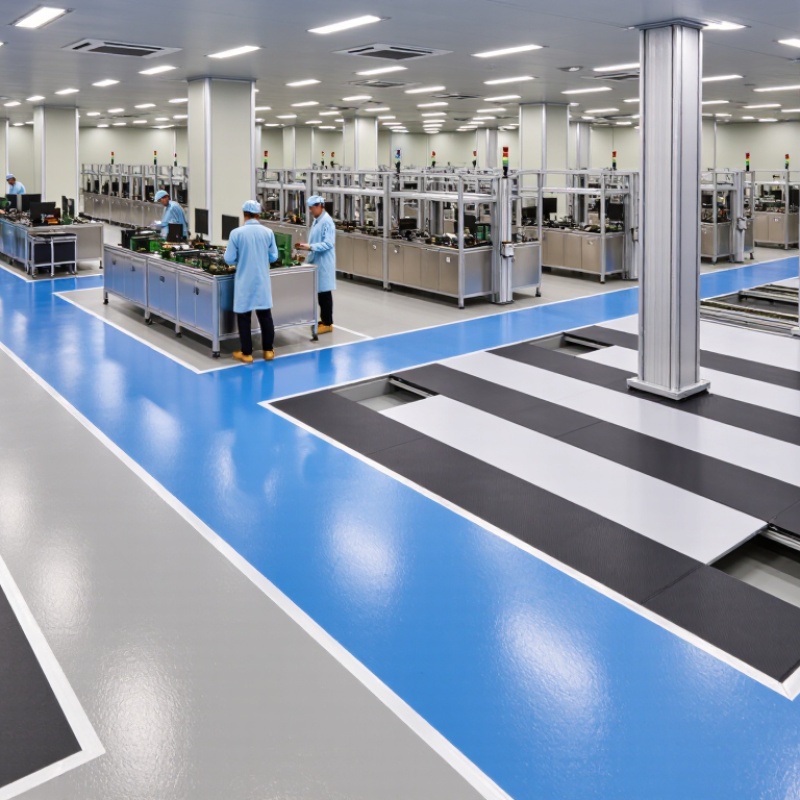
Table of Contents [Hide]
What Is ESD-Safe Flooring and Why Is It Important?
What Are the Top Types of ESD Safe Flooring?
ESD-safe flooring controls static electricity before it damages sensitive electronic parts. People create charges simply by walking across a dry floor. A conductive floor carries that charge toward a verified grounding point. A dissipative floor releases it more slowly and safely. Both systems need suitable footwear, grounding hardware, and regular testing.
Common choices include conductive vinyl, dissipative vinyl, rubber flooring, and conductive epoxy coatings. Vinyl offers clean seams and practical replacement options. Rubber provides comfort underfoot and can reduce fatigue during long shifts. Epoxy creates a hard, seamless surface for laboratories and production rooms. However, installation quality matters more than appearance. A beautiful floor can still fail if the grounding path is incomplete. Specifications should match recognized practices, such as ANSI/ESD S20.20 or IEC 61340-5-1, where applicable.
Tips: Test the floor after installation, then repeat checks on a planned schedule. Confirm resistance with calibrated equipment. Keep the surface clean, but avoid waxes that block conductivity. Control humidity when possible. Also inspect heel straps, seams, and grounding points. This detail is often missed. No system is flawless. Heavy traffic, contamination, and repairs can gradually change performance. Record test results and review unusual readings instead of assuming the floor remains compliant.

© Copyright - Pro Tool & Supply - Site by SVM E-Marketing Solutions - Sitemap
- Privacy policy