- Products
- Air Compressors & Air Tools
- Climate Control
- Compaction Equipment
- Concrete Cutting Tools & Equipment
- Concrete and Masonry
- Demolition & Excavation
- Electrical & Mechanical
- Fasteners and Anchoring Adhesives
- Floor Protection
- Generators and Welders
- Hand Tools
- Heaters
- Janitorial and Office Supplies
- Jobsite Protection
- Ladders & Storage
- Lighting & Lighting Accessories
- Man Lifts
- Material Handling Equipment
- Power Tools
- Pressure Washers & Pumps
- Safety Gear
- Safety Products
- Saws
- Surface Preparation
- SEASONAL PRODUCTS
- Rentals
- Air Compressor and Air Tool Rentals
- Climate Control Rental
- Compaction Rentals
- Concrete Equipment Rentals
- Demolition & Excavation Equipment Rentals
- Concrete Floor Grinder Rentals
- General Construction Equipment Rentals
- Generator Rentals and Welder Rentals
- Heater Rentals
- Light Tower Rentals
- Man Lift Rentals in Massachusetts and Rhode Island
- Material Handling Equipment Rentals
- Pressure Washer & Pump Rentals
- Saw Rentals in New England
- SEASONAL PRODUCTS
- Products
- Air Compressors & Air Tools
- Climate Control
- Compaction Equipment
- Concrete Cutting Tools & Equipment
- Demolition & Excavation
- Electrical & Mechanical
- Floor Protection
- Generators and Welders
- Construction Heaters
- Construction Ladders, Staging, & Storage
- Construction Lighting
- Man Lifts
- Material Handling Equipment
- Industrial Janitorial and Office Supplies
- Pressure Washers & Pumps
- Construction Safety Products
- Construction Safety Gear
- Surface Preparation
- Building Protection
- Diesel Accessories
- Zero Emissions
- Rentals
- Air Compressor and Air Tool Rentals
- Climate Control Rental
- Compaction Rentals
- Concrete Equipment Rental
- Demolition & Excavation Equipment Rental
- General Construction Equipment Rental
- Generator Rentals and Welder Rentals
- Construction Heaters Rental
- Light Tower Rentals
- Man Lift Rentals
- Material Handling Equipment Rental
- Pressure Washer & Pump Rentals
- Saw Rentals in New England
- Concrete Floor Grinder Rentals
- Zero Emissions Rentals
- Repairs & Used
- Parts
- Blog
- Services
- Resources
- About Us
- Contact Us
Sales & Rental of Construction | Industrial Equipment & Supplies


Why Choose a Crucible for Copper Melting?
Why Choose a Crucible For Copper?
Copper remains essential to electrical networks, renewable energy systems, construction, and transportation. The International Copper Study Group reported global refined copper usage of approximately 26 million metric tons in 2024. The U.S. Geological Survey also estimated global copper mine production near 22 million metric tons that year. These figures reveal a demanding industrial reality: copper melting requires consistency, not merely heat.
A suitable Crucible For Copper must tolerate high temperatures, chemical attack, thermal shock, and repeated handling. Graphite, silicon carbide, and clay-graphite crucibles each offer different balances of conductivity, strength, oxidation resistance, and service life. A properly selected crucible can reduce metal contamination and support steadier pouring. It can also protect operators from avoidable splashing and sudden failure. Small details matter. A cracked rim does too.
Casting specialist John Campbell has stated, “The quality of a casting is determined by the quality of the liquid metal.” His observation explains why crucible choice deserves more attention. Melting temperature alone does not guarantee sound copper. Clean charge materials, controlled heating, careful skimming, and correct crucible preheating remain essential. The European Copper Institute and foundry guidance from major refractory manufacturers repeatedly stress process control, though their recommendations differ by furnace design and alloy.
No crucible is perfect. Oxidation, flux compatibility, wall thickness, and operator technique can change performance significantly. This is where practical experience becomes valuable. A Crucible For Copper should be evaluated through documented trials, inspection records, and real production conditions. The best decision may not be the cheapest unit. It may be the one that fails less often.
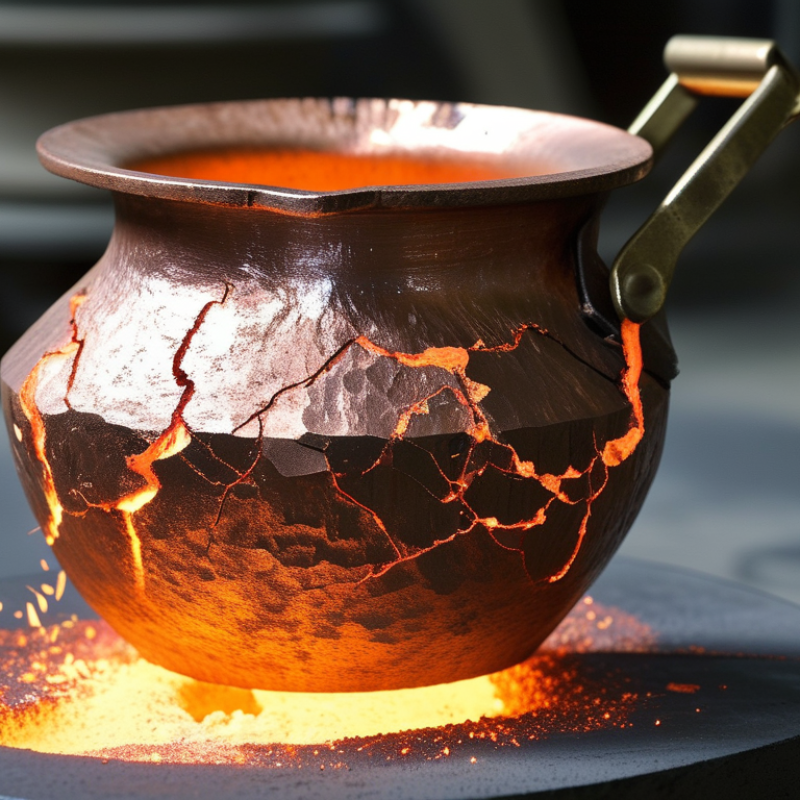
Table of Contents [Hide]
What a Crucible Does in Copper Melting
Why Choose a Crucible for Copper Melting?
A crucible is more than a container for molten copper. During copper melting, it holds the metal while managing intense heat and chemical exposure. Copper melts at about 1,085°C, so weak materials can fail quickly. A suitable crucible transfers heat steadily and reduces sudden temperature changes. This helps the copper melt evenly, with fewer cold pieces remaining in the charge. The process can look simple.
Its deeper role is chemical protection. Molten copper reacts with air, especially when overheated or held too long. A sound crucible limits unnecessary exposure and helps keep oxides away from the melt. It also prevents ash, scale, and furnace debris from mixing easily with the metal. Clean surfaces matter. Even small contaminants may affect fluidity, casting appearance, or later machining. In practical work, a covered crucible can provide extra protection, but no crucible removes every risk.
Shape affects pouring control. A balanced rim gives the operator a steadier stream and fewer metal splashes. Thick walls retain heat, yet they may slow heating and increase weight. However, thicker is not always better. I have seen operators focus on wall strength while overlooking thermal shock resistance. The better choice depends on furnace temperature, copper quantity, heating speed, and pouring frequency. Inspecting for cracks before each melt remains essential. One overlooked hairline crack can widen under heat. That detail deserves respect.

© Copyright - Pro Tool & Supply - Site by SVM E-Marketing Solutions - Sitemap
- Privacy policy